

Bangalore continues to dominate India’s property market as one of the most attractive cities for long-term real estate investment. Driven by rapid infrastructure growth, expanding IT corridors, strong rental demand, and a growing population of high-income professionals, the city offers multiple opportunities for investors in 2026.
Whether you are a first-time buyer, an experienced investor, or an NRI looking to diversify your portfolio, understanding the right investment strategy is critical for generating strong returns.
In this detailed guide, you will learn:
- Why Bangalore remains a top investment destination
- The best areas to invest in Bangalore in 2026
- Apartments vs plots vs villas
- How to identify high-growth locations
- Rental yield and appreciation trends
- Mistakes investors should avoid
- Expert strategies to maximize ROI
If you are searching for insights on real estate investment in Bangalore, this guide will help you make smarter and more profitable decisions.
Why Bangalore Real Estate Is Growing in 2026
Bangalore is not just India’s technology capital anymore. It has evolved into a major economic and infrastructure-driven city attracting investors from across India and overseas.
Several factors continue to fuel property demand across Bangalore.
Expanding IT and Startup Ecosystem
Bangalore houses:
- Global tech companies
- Startups
- AI and SaaS firms
- Global Capability Centers (GCCs)
This creates continuous demand for:
- Residential apartments
- Rental housing
- Premium villas
- Commercial spaces
A steady flow of working professionals entering the city supports both property prices and rental demand.
Major Infrastructure Development
Infrastructure growth is one of the biggest reasons why Bangalore real estate continues to outperform many other Indian cities.
Key infrastructure projects shaping the market include:
- Metro Phase 2 and 2B
- Peripheral Ring Road (PRR)
- Satellite Town Ring Road (STRR)
- Airport expansion
- Elevated corridors
- Suburban rail network
Areas connected to upcoming infrastructure projects usually witness faster property appreciation over time.
For long-term investors, infrastructure connectivity is often more important than current market prices.
Strong Rental Demand
Bangalore remains one of the few Indian cities where investors can benefit from both:
- Capital appreciation
- Consistent rental income
High rental demand comes from:
- IT employees
- Startup founders
- Corporate executives
- Students
- Expats
Locations near tech parks and metro connectivity continue to generate healthy rental yields.
Best Areas for Real Estate Investment in Bangalore
Choosing the right location plays the biggest role in determining investment returns.
Here are some of the top investment hotspots in Bangalore for 2026.
North Bangalore
North Bangalore has emerged as one of the fastest-growing real estate corridors in the city.
Why Investors Prefer North Bangalore
Growth drivers include:
- Kempegowda International Airport
- Aerospace parks
- Business parks
- Upcoming metro connectivity
- STRR and PRR development
Popular locations include:
- Devanahalli
- Hebbal
- Yelahanka
- Thanisandra
- Bagalur
North Bangalore is especially attractive for:
- Plotted developments
- Luxury apartments
- Long-term appreciation
Many investors believe this corridor still has strong growth potential over the next decade.
Whitefield
Whitefield remains one of Bangalore’s strongest residential and rental markets.
Advantages of Investing in Whitefield
- Strong IT employee demand
- Operational metro connectivity
- High rental occupancy
- Better resale opportunities
Whitefield is ideal for investors seeking:
- Stable rental income
- Lower vacancy risk
- Mid-to-long-term appreciation
The area continues to attract professionals working in nearby IT parks and multinational companies.
Sarjapur Road
Sarjapur Road has transformed into a major residential hub due to its connectivity to:
- Outer Ring Road
- Electronic City
- Whitefield
Why Sarjapur Is Popular
- Growing social infrastructure
- Presence of international schools
- Strong residential demand
- Increasing commercial development
The area is suitable for both end-users and investors looking for long-term growth.
Electronic City
Electronic City remains one of the most affordable investment zones among Bangalore’s major IT hubs.
Key Benefits
- Strong rental demand
- Affordable entry pricing
- Large working population
- Consistent occupancy rates
Investors looking for rental-focused properties often prefer Electronic City due to steady tenant demand.
Hoskote and East Bangalore Growth Corridor
Emerging areas such as:
- Hoskote
- Budigere Cross
- Old Madras Road corridor
are gaining attention because of infrastructure expansion and lower land prices.
These locations are increasingly popular for:
- Plotted developments
- Long-term land investment
- Early-stage investors
As Bangalore expands outward, peripheral growth corridors could deliver strong appreciation over the next several years.
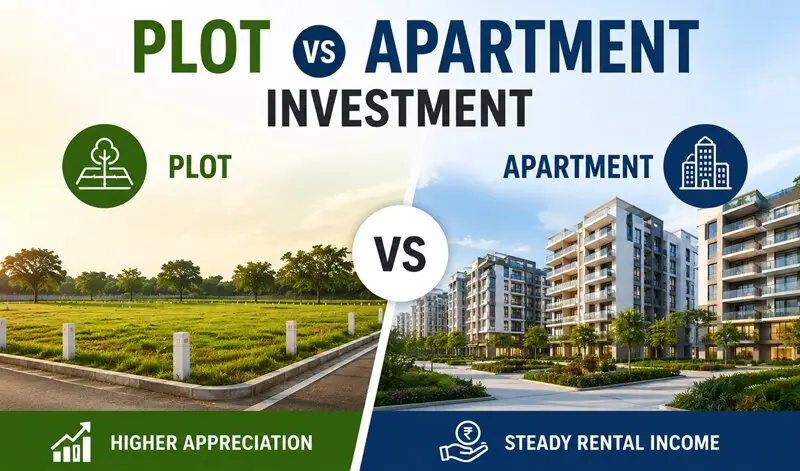
Apartments vs Plots vs Villas: Which Is Better?
One of the biggest questions investors ask is whether to invest in:
- Apartments
- Plots
- Villas
The answer depends on your investment goals.
Investing in Apartments
Apartments are best for:
- Rental income
- Lower maintenance management
- Easier financing
- Immediate usability
Advantages
- High tenant demand
- Gated community amenities
- Better security
- Easier resale in prime areas
Challenges
- Maintenance costs
- Slower appreciation compared to land
- Depreciating building structure over time
Apartments near IT parks and metro stations generally perform better in terms of rental occupancy.
Investing in Plots
Plots are considered one of the strongest long-term wealth-building assets.
Advantages
- Higher appreciation potential
- Limited land supply
- Low maintenance
- Construction flexibility
Challenges
- No immediate rental income
- Longer holding period required
- Infrastructure development may take time
Plots in developing corridors often appreciate significantly after infrastructure projects become operational.
Investing in Villas
Villas are increasingly popular among premium buyers seeking:
- Larger homes
- Privacy
- Gated communities
- Lifestyle-focused living
Luxury villa demand is growing in select Bangalore micro-markets due to rising income levels and lifestyle upgrades.
How to Maximize Returns from Real Estate Investment in Bangalore
Successful investors follow a strategic approach instead of buying property emotionally.
Here are some important ways to improve investment returns.
Invest Near Upcoming Infrastructure
Properties near future infrastructure projects usually witness higher appreciation.
Look for locations close to:
- Metro lines
- Ring roads
- Tech parks
- Airport corridors
- Business districts
Buying early before infrastructure completion often provides better upside potential.
Study the Micro-Market
Not all areas in Bangalore perform equally.
Before investing, analyze:
- Rental demand
- Future supply
- Employment hubs
- Traffic connectivity
- Social infrastructure
Micro-market research helps investors identify high-growth opportunities early.
Focus on Rental Yield
Rental yield measures how much annual rental income a property generates compared to its value.
Rental Yield=(Property PriceAnnual Rental Income)×100
For example:
If:
- Property price = ₹1 crore
- Annual rent = ₹4 lakh
Then:
(1004)×100=4%
A healthy residential rental yield in Bangalore generally ranges between 3% and 5%.
Choose RERA-Approved Projects
Always verify:
- RERA registration
- Land title clarity
- Legal approvals
- Occupancy certificate
- Builder credibility
Legal due diligence is essential to reduce investment risk.
Invest for the Long Term
Real estate performs best over longer holding periods.
A 5–10 year investment horizon generally provides:
- Better appreciation
- Improved rental growth
- Reduced market volatility impact
Long-term investors often benefit more from Bangalore’s infrastructure-driven expansion.
Common Mistakes to Avoid
Buying Only Because Prices Are Low
Cheap properties may not always generate strong returns.
Evaluate:
- Future development
- Rental demand
- Connectivity
- Infrastructure pipeline
Ignoring Resale Potential
A good investment property should also be easy to sell later.
Properties from reputed developers in established corridors usually have stronger resale demand.
Underestimating Total Costs
Many investors ignore:
- Registration charges
- GST
- Interior expenses
- Maintenance fees
- Property taxes
These costs affect actual investment returns.
Investing Without Clear Goals
Before buying property, define your objective.
Are you investing for:
- Rental income?
- Long-term appreciation?
- Retirement planning?
- Passive income?
- Portfolio diversification?
Your investment strategy should match your financial goals.
Is Bangalore a Good Real Estate Investment in 2026?
Bangalore remains one of India’s strongest real estate markets because of:
- Economic growth
- IT expansion
- Infrastructure development
- Population growth
- Strong rental demand
Unlike purely speculative markets, Bangalore continues to show genuine end-user demand, which supports long-term stability.
For investors seeking a balance between:
- Appreciation
- Rental income
- Wealth creation
Bangalore continues to remain a preferred destination in 2026.
Expert Tips for First-Time Investors
Start with Growth Corridors
New investors should focus on:
- North Bangalore
- Whitefield
- Sarjapur Road
- Electronic City
These areas have strong long-term demand fundamentals.
Prioritize Connectivity
Properties close to:
- Metro stations
- Employment hubs
- Schools
- Hospitals
typically perform better over time.
Choose Reputed Builders
Developer reputation directly impacts:
- Construction quality
- Delivery timelines
- Resale value
- Rental demand
Diversify Your Investments
Some investors combine the following:
- Apartments for rental cash flow
- Plots for long-term appreciation
This creates a balanced real estate portfolio.
Final Thoughts
Real estate investment in Bangalore continues to offer significant opportunities in 2026 for investors who focus on:
- Location quality
- Infrastructure growth
- Rental demand
- Long-term planning
The city’s strong economic base, expanding metro network, growing tech ecosystem, and rising housing demand make it one of India’s most resilient property markets.
However, maximizing returns requires careful research, legal verification, and strategic location selection.
Instead of chasing short-term market trends, successful investors focus on:
- Future infrastructure
- High-demand micro-markets
- Long-term holding potential
With the right strategy, Bangalore real estate can become a powerful long-term wealth creation asset.
FAQ:
The best areas to invest in Bangalore real estate in 2026 are North Bangalore, Whitefield, Sarjapur Road, Electronic City, and Devanahalli, which are among the top investment locations in Bangalore due to infrastructure growth, metro connectivity, and strong rental demand. (Reference: propertysuggest)
Yes, Bangalore remains one of India’s strongest real estate markets because of its IT industry, startup ecosystem, infrastructure expansion, and high rental demand. The city offers both capital appreciation and rental income opportunities.
Plots generally offer better long-term appreciation because land is limited, while apartments provide immediate rental income and easier financing. The right option depends on your investment goals and holding period. Plot vs Apartment Investment
Residential rental yields in Bangalore typically range between 3% and 5%, especially in IT corridors such as Whitefield, Electronic City, and Sarjapur Road.
Yes, North Bangalore is considered one of the fastest-growing real estate corridors due to airport expansion, metro connectivity, aerospace parks, and major infrastructure projects like STRR and PRR.
To maximize returns:
- Analyze rental demand before investing
- Invest near upcoming infrastructure projects
- Choose high-demand micro-markets
- Buy RERA-approved properties
- Focus on long-term holding
Some common risks include:
- Legal approval issues
- Delayed project delivery
- Poor location selection
- Overpaying in saturated markets
- Low resale demand
Proper research and due diligence can help reduce these risks.
Ready-to-move properties offer immediate possession and rental income, while under-construction properties may provide lower entry prices and higher future appreciation potential.